
Right. Fostering.
You’ve seen the photos. A lovely dog curled up on a blanket, someone saying they’re giving them a temporary home, and everyone in the comments telling them what an amazing person they are.
Lovely, isn’t it?
What you don’t see is the foster carer standing in the garden in their pyjamas at stupid o’clock, wondering why the dog won’t have a shit, while their own dogs are looking through the window like they’ve invited a complete fucking stranger into the house.
Welcome to rescue.
Now, before we go any further, fostering is one of the most important things people can do for CWF. Without foster homes, we simply can’t help as many dogs as we’d like to.
But I’m not going to sit here and tell you it’s all cuddles and cute photos.
Because it fucking isn’t.
“I’ve Got a Spare Sofa. How Hard Can It Be?”
Famous last words.
People sometimes think fostering means taking a dog in, feeding them, walking them and giving them somewhere comfy to sleep until their forever home comes along.
And sometimes, yes, parts of it look like that.
But the dogs we take on at CWF can have complex behavioural needs, medical conditions, physical disabilities or very little experience of living in a home where someone actually gives a shit about them.
Some have bite histories. Some are frightened of people. Some struggle around other dogs. Some need proper management before you can even begin thinking about training.
So no, you don’t just open the front door, introduce them to your resident dogs and hope everyone becomes best mates by teatime.
That’s not fostering. That’s a fucking terrible plan.
There needs to be thought behind where a dog goes, what they need and whether the home can realistically meet those needs.
And sometimes, despite everyone trying their best, a placement doesn’t work.
That doesn’t mean the dog is bad. It means we need to look at what isn’t working and do something about it.
Preferably before everyone loses their minds.
Your House Is About to Become a Dog Management Facility
If you’ve got dogs of your own, you’re not just bringing another dog home and cracking on as normal.
You need to think about introductions, space, routines, feeding, toys and where everyone is going to settle.
Especially when you’re dealing with dogs who might have resource guarding issues.
And if you’ve read my trustee blog, you’ll know I’m apparently incapable of finding a dog without some sort of spicy personality trait.
I don’t know what it is.
Show me a lovely, easy-going dog and I’ll say, “Oh, he’s gorgeous.”
Show me a little shit who might take your fingers off for looking at his dinner wrong and suddenly I’m interested.
Which probably explains quite a lot about the state of my house.
But joking aside, management matters. You don’t set a dog up to fail and then act shocked when something goes wrong.
You give them space. You learn about them. You put things in place to keep everyone safe.
And you accept that your house might look less like a lovely family home and more like someone’s opened a branch of Pets at Home in the hallway.
Then There’s the Emotional Side. Fucking Brilliant.
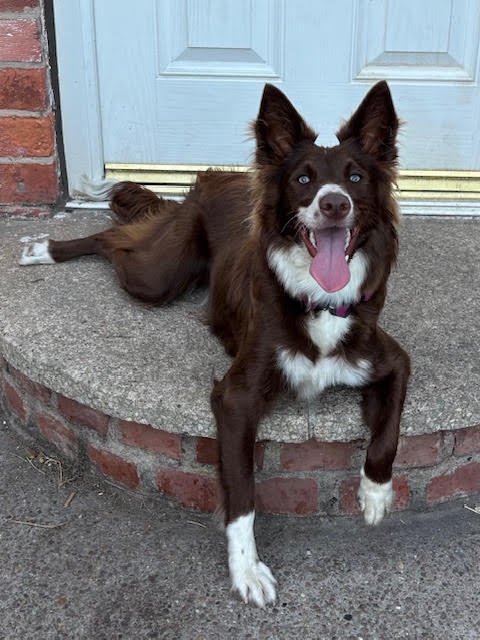
Here’s the bit nobody can properly prepare you for.
You get attached.
Of course you bloody do.
You spend weeks or months with a dog. You learn their little habits. You know what makes them nervous, what makes them happy and which ridiculous noise means they want something.
You watch them start to trust you.
You celebrate things that would sound absolutely pathetic to anyone who hasn’t fostered.
“He played with a toy today!”
“He walked past someone!”
“He actually relaxed!”
And you’re there acting like the dog’s just won an Olympic gold medal.
Because to you, those things are massive.
Then the right home comes along.
And you’re thrilled.
And you’re also standing there thinking, Oh, fuck. I’ve got to let you go.
Both feelings can exist at the same time.
You can know a dog is going to have an incredible life and still cry like an absolute baby when they leave.
I did with Dutch.
Or Mud, as he’s called now.
I knew he was going to the right home with Sam. I knew it was everything we’d wanted for him.
Still cried.
Then cried some more.
Very dignified. Really held it together.
“I Could Never Foster. I’d Get Too Attached.”
Ah, this one.
If I had a pound for every time someone said this, I could probably pay for half the rescue’s vet bills.
I get what people mean. I really do.
But do you think foster carers don’t get attached?
Do you think we’re just handing dogs over like Amazon parcels?
Of course we get attached.
That’s partly why we do it. We care about them.
The hard bit is remembering that fostering isn’t about keeping every dog you fall in love with. It’s about helping them get to where they’re supposed to be.
Sometimes that’s a new family.
Sometimes it’s a home with someone who has the experience, time or setup that dog needs.
And sometimes…
Well.
Sometimes you’re me.
Violet and Bandit Would Like a Word
Violet was supposed to be a rescue dog I was helping.
Our radiator kid from Croydon. The little lunatic who’d been tied to a radiator for biting people.
At the time, we thought she was a Cockerdor.
Turns out she’s a spaniel–Malinois mix.
Which explained a fucking lot.
A year later, I was still telling everyone she wasn’t ready for adoption.
Then someone applied for her.
So I hung up the phone and refused to speak to anyone.
A perfectly mature, professional response from a charity trustee, I’m sure you’ll agree.
Anyway, Violet stayed.
Then there’s Bandit.
I went to Nic’s to help decorate and somehow ended up with dog number four and a bank account a few grand lighter.
Why anyone thought letting me foster a disabled Cockapoo was a sensible idea, I’ll never know.
He was never fucking leaving.
And yes, I’m aware this makes me a terrible person to deliver a lecture about letting foster dogs go.
I contain multitudes.
Mostly Cockapoos.
But Fostering Isn’t Just About the Ones Who Stay
As much as I love my own collection of little arseholes, the whole point of fostering is to give dogs somewhere safe while we work out what comes next.
Dutch came to me at nine months old after being taken to a vet to be put to sleep.
He’d spent most of his young life shut away, and when he arrived he was extremely reactive to people.
It took time, a sly sausage and a ball to start winning him round.
He met other dogs. He learned to play. He started to feel safe.
Then he moved to a longer term foster home while we looked for the right person.
And eventually, along came Sam.
Dutch is Mud now, living his best life with his dad and sister.
If nobody had offered him somewhere to go when those vets reached out, his story could have ended at nine months old.
That’s why foster homes matter.
Not because every dog arrives grateful and immediately curls up on your lap.
Because sometimes a dog needs someone to give them time and a chance when they’ve got precious few options left.
You Don’t Have to Know Everything. You Do Have to Be Honest.
Nobody expects a foster carer to magically know everything about every dog.
We certainly fucking don’t.
Rex taught us that.
We tried things that weren’t working, had to change our approach and get the right help. Rach went to bootcamp with him, put the work in and came out the other side with a dog who’d made progress and a lot more confidence in herself.
But you do need to be honest.
If you’re struggling, tell us.
If a dog’s behaviour changes, tell us.
If something isn’t working, please don’t sit there pretending everything’s fine because you think admitting it makes you a bad foster carer.
We need to know what’s actually happening so we can make decisions that are right for the dog and safe for everyone involved.
Fostering isn’t a competition to see who can put up with the most shit without asking for help.
There’s no trophy.
Although if there were, I’m fairly sure Welly Rach would have several gathering dust somewhere underneath a pile of dog leads.
And No, You Can’t Just Have Any Dog You Fancy

I know. Outrageous.
You see a photo, fall in love with a face and decide that’s the dog you want to foster.
But the right foster home isn’t always the one with the biggest heart or the nicest sofa.
It’s the one that can meet that particular dog’s needs.
We have to consider your household, your own animals, your experience, your routine and what you can realistically manage.
That’s not us being awkward for the sake of it.
Believe me, I’ve got enough to do without inventing extra fucking admin.
It’s about giving a placement the best possible chance of working.
A dog who needs a quiet, carefully managed environment isn’t going to benefit from being dropped into a house full of activity just because someone really likes the look of them.
And equally, we don’t want foster carers taking on more than they can safely manage.
The dog matters.
So do you.
So Why the Fuck Would Anyone Do It?
Because you get to see the bits other people don’t.
The first time a frightened dog chooses to come near you.
The first time they play.
The first time they settle.
The moment you realise they’re not spending every second waiting for something bad to happen.
You get to watch a dog become more comfortable in the world, at their own pace.
And sometimes you get to hand them over to someone who looks at them the same way you do.
Someone who sees the dog, not just the difficult history.
That feeling is hard to explain.
It’s also why we keep doing this to ourselves.
Despite the dog hair, the disrupted routines, the worry, the tears and the occasional desire to launch your phone at the wall.
Fancy Fostering? Read This Bit First.
We need people who are prepared to work with us, be honest about what they can offer and understand that fostering a rescue dog can be bloody hard work.
You don’t need to have a house full of dogs. In fact, for some of our dogs, a home without resident dogs may be exactly what they need.
You don’t need to pretend you’re a dog trainer.
And you definitely don’t need to take on a dog whose needs are beyond what you can manage.
What we do need is people willing to listen, learn, communicate and give a dog the time and space they need.
People who understand that progress isn’t always a straight line.
People who can love a dog without expecting them to be perfect.
And people who know that sometimes the best thing you can do for a dog is help them move on to their forever home.
Even when it absolutely breaks your heart.
If that sounds like something you could offer, we’d love to hear from you.
Just don’t come crying to me when you’ve got a foster dog asleep on your favourite chair, your own dog’s sulking and you’ve started referring to a dog gate as part of the furniture.
I did warn you.
And if you end up keeping a disabled Cockapoo after going round someone’s house to help decorate?
Well.
I’m probably not the person to judge.