Well, this is going to be a mixed one.
Because saying “No, we don’t want every dog” makes us sound like a fucking awful dog rescue.
But we don’t.
And there’s a reason for that.
CWF takes certain dogs because, quite simply, we know what we’re doing with them.
Dogs with behavioural needs.
Dogs with medical needs.
Dogs with bite histories.
Dogs who need experienced foster carers, trainers and people willing to look beyond the shit written about them and actually work with the dog standing in front of them.
Those are the dogs we built CWF to help.
And sometimes that means a perfectly lovely dog with no behavioural or medical issues comes along needing rescue and we’ll approach another rescue to see if they can help instead.
Not because that dog doesn’t matter.
Of course they fucking matter.
But because if another rescue can offer that dog a place, it means our space can stay available for the dog whose options are rapidly disappearing.
The dog who, in a sense, needs that particular space more.
That’s not a nice thing to have to think about.
But rescue isn’t always nice.
Somebody Is Going to Lose Out
There aren’t unlimited foster homes.
There isn’t unlimited money.
There aren’t unlimited trainers, transporters or hours in the fucking day.
So sometimes there are two dogs needing help and only one suitable place.
One has no known behavioural issues, no significant medical needs and could potentially be supported by a number of rescues.
The other has a bite history, significant behavioural needs or medical needs that dramatically reduce the number of places willing or able to take them.
Which one do we take?
For CWF, very often, it’s the second dog.
Because that’s where we know we can be useful.
It doesn’t make the first dog less deserving.
It means we’re looking at where our particular rescue can make the biggest difference.
Most Rescues Aren’t CWF And That’s Fine.
I’m going to tread carefully here because I can already hear Facebook opening in another tab.
Most rescues naturally want dogs they know they can safely place into foster and eventually rehome.
Dogs without significant behavioural issues are generally easier to find homes for than dogs with complex needs.
That’s not me slagging off other rescues.
Don’t call the police.
And please don’t throw me onto one of those Facebook exposing pages where every Sally and Suzie suddenly has a degree in dog behaviour, charity governance, rescue management and apparently my fucking life.
Especially when half of them appear to contribute absolutely fuck all to rescue apart from drama.
Anyway.
Enough about Sally and her high horse.
The point is that different rescues have different setups.
Different foster networks.
Different experience.
Different trainers.
Different levels of risk they’re prepared or equipped to manage.
And that’s a good thing.
We don’t all need to do the same job.

We Know What Our Job Is
CWF has ended up with dogs that aren’t necessarily the easy option.
And I don’t mean that in some heroic look at us saving the dogs nobody else wants bollocks.
We take them because we’ve built a team around being able to support them.
Our foster carers are fucking brilliant.
The trainers who work with us are fucking brilliant.
And we’ve learnt a hell of a lot from the dogs we’ve already helped.
We don’t look at a bite history and automatically see a bad dog.
We don’t look at reactivity and decide a dog is fucked.
We don’t see resource guarding and pretend the dog just needs more cuddles.
We look at what is actually happening.
What does this dog need?
What can we safely manage?
What support does the foster carer need?
What does the trainer think?
What environment gives this particular dog the best chance?
And sometimes the answer is that we can help.
Sometimes it isn’t.
We’re not fucking magicians.
But we’re prepared to look.
The Dog in Front of Us Comes Before the Label
This comes back to something we say constantly.
We work with the dog in front of us.
Not just the breed.
Not just the bite history.
Not just the description somebody gave us over the phone.
Not just the worst thing that dog has ever done.
All of those things can be relevant. We don’t ignore risk because that would be fucking stupid.
But none of them, on their own, tell us everything about an individual dog.
We want to understand what happened.
What was the environment?
What were the triggers?
What has the dog learnt?
What are they communicating?
What needs to change?
What can realistically be worked with and managed?
That’s where our foster carers and trainers become so bloody important.
Because you don’t learn a dog from a paragraph.
You learn them by actually working with them.
A Dog Being “Easy” Doesn’t Make Them Less Important
This is the bit I don’t want getting twisted.
A dog with no behavioural issues is not less deserving of rescue.
A dog without a dramatic story still deserves a safe home.
A lovely family dog needing somewhere to go still fucking matters.
That’s why, where appropriate, we’ll approach other rescues.
If another rescue has the space and setup to help that dog, brilliant.
That’s one dog safe.
And if that means we can use our resources for a dog with far fewer options, that’s another dog who might now have a chance too.
Surely that’s what rescue should be about?
Not who gets the credit.
Not whose logo is on the adoption post.
Getting the dogs where they need to be.
Because the Difficult Dogs Still Need Somewhere To Go
Some of our dogs have come with baggage.
Actual baggage.
Not the cute little he’s a bit nervous until he knows you sentence people put on adoption posts.
Reactivity.
Resource guarding.
Barrier frustration.
Bite histories.
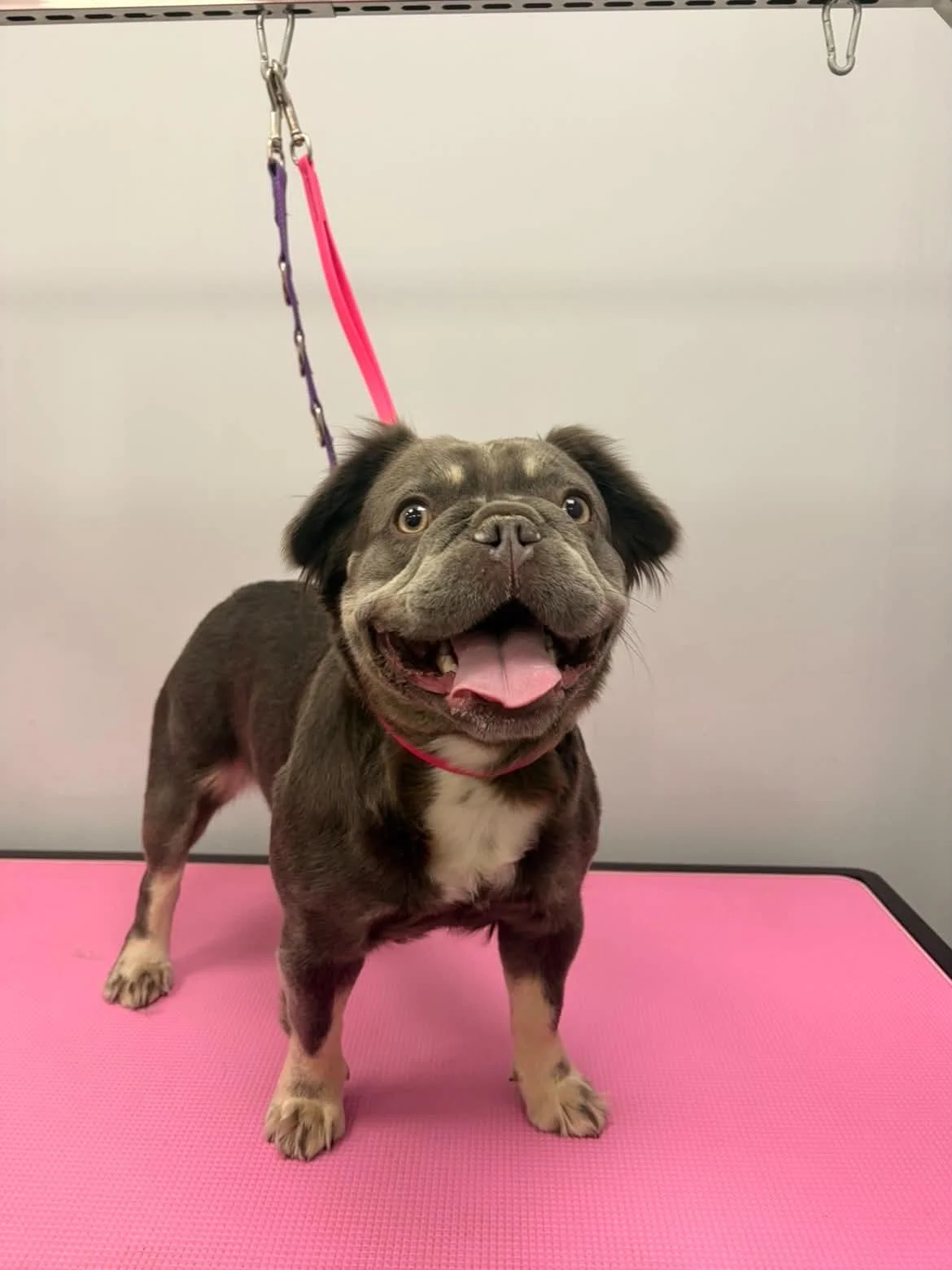
Dogs who couldn’t cope with being groomed.
Dogs who had already bounced through homes.
Dogs whose behaviour meant their future was uncertain.
Those dogs aren’t going to fit every rescue.
They aren’t going to fit every foster home.
And they absolutely aren’t going to fit every adopter.
That’s okay.
They don’t need everybody.
They need the right somebody.
Bruno needed Sam.
Fred needed the work YCA had already started and then Sam continuing it in foster.
Rex needed Rach to go back for him when placements didn’t work, and they both needed the support they got from YCA before Rex eventually found Owain.
The point isn’t that CWF swooped in and magically fixed them.
We didn’t.
People put the fucking work in.
That’s why we’re able to consider dogs other places may not be set up for.
We’re Not Trying to Save the Most Dogs
This isn’t a numbers competition.
I’d rather CWF helped fewer dogs properly than took hundreds because a massive intake number looked impressive on Facebook.
Every dog we take has to become an individual to us.
They have a name.
A foster carer.
Needs.
A personality.
A plan that will probably change seventeen fucking times because dogs are very inconsiderate and refuse to read the plan beforehand.
And people behind them who become invested in what happens next.
That’s how we want it.
So No, We Don’t Want Every Dog
We want every dog to be safe.
There’s a difference.
If another rescue is better placed to help a straightforward dog, we’ll ask.
And we’ll be fucking grateful if they can.
Because perhaps that leaves us able to say yes when the next phone call is about a dog with nowhere obvious to go.
The reactive one.
The one with the bite history.
The one with medical needs.
The one who’s already been passed around.
The one somebody has already decided is too much work.
Those are often the dogs where CWF can be most useful.
We won’t always be able to say yes to them either.
But we’ll look at the dog.
We’ll look at what they actually need.
And we’ll make the decision from there.
Not because we’re better than other rescues.
Not because our way is the only way.
And definitely not because Sally from Facebook has completed her latest investigation from the comfort of her fucking sofa.
Different rescues have different strengths.
This is ours.
We take the dogs we believe we can genuinely help.
We work with the dog in front of us.
And when we say yes to one of the difficult ones?
We don’t expect them to arrive wearing a fucking bow.