Bowie isn’t a teddy bear. He’s a dog!
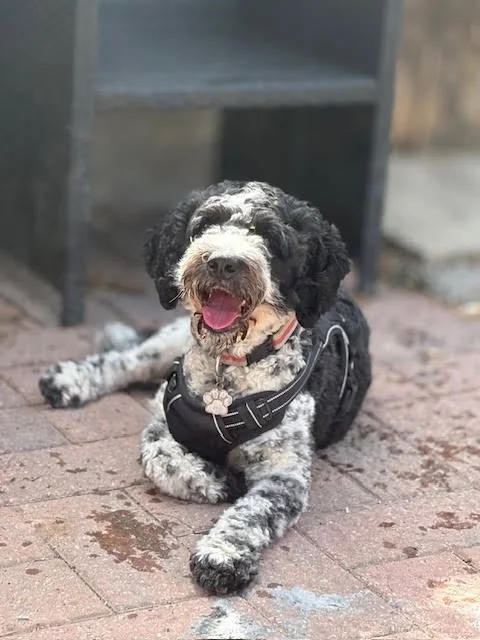
There was a point when Bowie’s owner was genuinely worried about what would happen if he ever got ill.
Not because he had some terrible medical condition.
Because she wasn’t sure she’d be able to get near him.
Bowie was anxious, he resource guarded, and when he was uncomfortable he could be grumpy and unpredictable.
So his owner was already thinking about the situations nobody really wants to think about.
What happens if he’s injured?
What happens if he’s in pain?
What happens if he needs a vet and won’t let anyone safely examine him?
And what the hell do you do when you love your dog, but you’re starting to realise that love on its own might not be enough?
That was Bowie.
A ridiculously fluffy Cockapoo with a face that says cuddly teddy bear and a behavioural history that said:
It’s a little more fucking complicated than that.
His owner knew she couldn’t simply pass him on to somebody else and hope for the best.
She knew his behaviour needed to be understood.
She knew something had to change.
And she was frightened that eventually she might be faced with the option nobody who loves their dog wants to contemplate.
Euthanasia.
So she did something that people on social media are remarkably quick to judge.
She asked for help.
And that’s how Bowie came to CWF.
Not because she didn’t love him.
Not because she’d got bored of him.
Not because she woke up one morning and decided life would be easier with one less Cockapoo in it.
She contacted us because she was worried about him, worried about the future and honest enough to admit:
I don’t know what to do for the best anymore.
That honesty matters.
Because whenever somebody relinquishes a dog, there’s usually somebody lurking in a Facebook comments section ready to announce:
“I’d NEVER give up on mine.”
“A dog is for life.”
“He just needs more love.”
Good for you, Susan.
Nobody asked.
It’s incredibly easy to be the world’s greatest dog owner from the comments section of Facebook.
It’s slightly different when you’re actually living with an anxious dog who resource guards.
You start scanning the floor before the dog does.
What’s that?
Sock.
Move it.
What’s he got now?
Why has he suddenly gone quiet?
Can I pick that up?
Can I walk past him?
What happens if he gets something dangerous?
What happens if he bites?
What happens if next time things escalate?
Eventually, your relationship with your dog can become less about enjoying them and more about trying to prevent the next incident.
Bowie’s owner recognised that something needed to change.
And rather importantly, she was honest with us about the difficult bits.
She didn’t make him sound easier than he was.
She didn’t simply hand the problem to somebody else and cross her fingers.
She asked for help.
That isn’t failing your dog.
Sometimes recognising that you are no longer the right environment for a dog is the responsible thing to do.
Bowie didn’t need a villain.
He needed help.
And that brings us rather neatly to Cockapoos.
Because before we tell you what happened to Bowie next…
We need to talk about the bloody doodles.
A Cockapoo Is Not a Teddy Bear
Somewhere along the way, we’ve managed to forget what a Cockapoo actually is.
Look at some of the marketing around doodle-type dogs and you’d think somebody had finally cracked the code.
Fluffy.
Friendly.
Cuddly.
Clever.
Fantastic family dog.
Perfect first dog.
Basically a teddy bear with a heartbeat.
There’s just one tiny problem.
They’re dogs.
Actual dogs.
With genetics.
Instincts.
Boundaries.
Teeth.
And occasionally some very strong opinions about your attempts to retrieve the sock they’ve just nicked.
A Cockapoo comes from Cocker Spaniel and Poodle lines.
There is no teddy bear involved.
Cockers are gundogs. They were developed to hunt, flush and work alongside humans. They can be energetic, driven and sensitive little sods, and some are extremely interested in picking things up, carrying things and possessing things.
Then you’ve got the Poodle.
Also a dog with working and retrieving ancestry.
Often highly intelligent, athletic and sensitive.
And everybody loves the word intelligent when they’re buying a puppy.
“Oh, they’re SO clever!”
Brilliant.
Do you know what’s sometimes considerably harder than a stupid dog?
A clever dog with opinions.
Put those genetics together and you haven’t magically manufactured a cuddly toy.
You’ve got a dog who can inherit different combinations of traits from both sides.
And genetics isn’t a fucking Build-A-Bear workshop.
You don’t get to stand there ticking boxes.
Curls — yes please.
Cute face — absolutely.
Intelligence — loads of that.
Working drive — no thanks.
Sensitivity — take that out.
Resource guarding — definitely not.
Anything remotely inconvenient — delete.
That’s not how it works.
Even puppies from the same litter can grow into very different dogs.
Genetics matter.
Early experiences matter.
Socialisation matters.
Learning matters.
Environment matters.
Physical health matters.
The individual dog matters.
And sometimes, despite people doing their bloody best, behavioural problems develop.
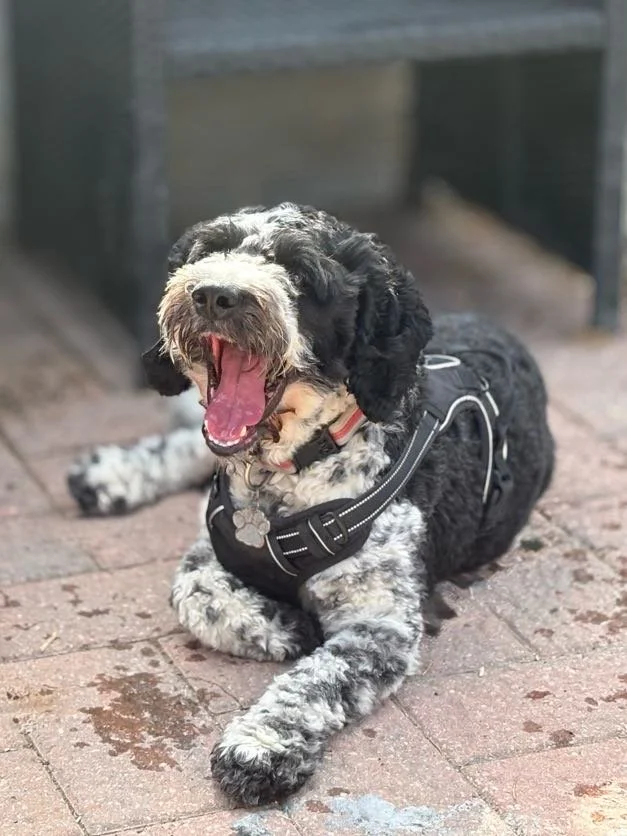
And the marketing hasn’t exactly helped.
There are absolutely responsible breeders who care enormously about health, temperament and where their puppies end up.
We’re not talking about them.
We’re talking about the parts of the breeding industry that churn out fluffy puppies while selling families an unrealistic fantasy.
“Perfect family pet.”
“Amazing with children.”
“Wonderful temperament.”
“Easy first dog.”
“Cuddly teddy bear.”
Maybe.
Or maybe you’ve combined two intelligent dogs with working ancestry and wrapped the result in curls.
When we repeatedly see doodle-type dogs coming to us needing help with behavioural issues such as resource guarding, we have to be willing to talk about the expectations people were given in the first place.
Because if you sell somebody a teddy bear, they’re understandably a bit confused when Teddy grows up, develops boundaries and tells them to fuck off when they try to take his chew away.
Sometimes nothing has suddenly “gone wrong”.
Your puppy became a dog.
And dogs communicate.
Resource Guarding Doesn’t Mean Your Dog Is An Arsehole
Although, admittedly, it can feel like it when you’re standing six feet away negotiating the release of a stolen tissue like you’re dealing with an armed hostage situation.
Resource guarding is essentially a dog trying to retain access to something they consider valuable.
Food is the obvious one.
But it could be a chew.
A toy.
A bed.
A sock.
A tissue.
A space.
A person.
Or some completely inexplicable bit of rubbish they’ve found despite you being absolutely certain you cleaned the bloody house.
And resource guarding doesn’t necessarily begin with a bite.
Dogs communicate long before that.
They might freeze.
Move away with the item.
Put their body over it.
Stiffen.
Turn their head.
Give you the look.
Growl.
Snap.
And, if the situation escalates, bite.
Which brings us to something important.
Don’t punish the growl.
A growl is information.
Your dog has essentially sent you a strongly worded email saying:
“Fuck off. I’m not comfortable with this.”
You don’t have to like the email.
But you should probably read it.
Punishing a warning doesn’t necessarily change the emotion underneath it. You may simply teach the dog that communicating their discomfort in that way doesn’t work.
And a dog who stops giving obvious warnings isn’t necessarily a safer dog.
Understanding why behaviour happens doesn’t mean excusing dangerous behaviour either.
A bite fucking hurts.
Dogs can cause serious injuries.
A dog can be frightened and dangerous.
A dog can be anxious and unsafe in a particular situation.
Both things can be true.
Understanding behaviour simply gives us a better chance of doing something useful about it.
Which is exactly what Bowie needed.
Enter James — Project Better Dog
When Bowie came into CWF, he didn’t just need a spare sofa and somebody willing to love him.
Love is important.
Love is not a behavioural rehabilitation plan.
Neither, unfortunately, is chicken.
We bloody love chicken.
Chicken is not a behavioural rehabilitation plan either.
Bowie needed somebody who could understand what he was communicating and give him structure, consistency and appropriate management without constantly pushing him beyond what he could cope with.
Enter James.
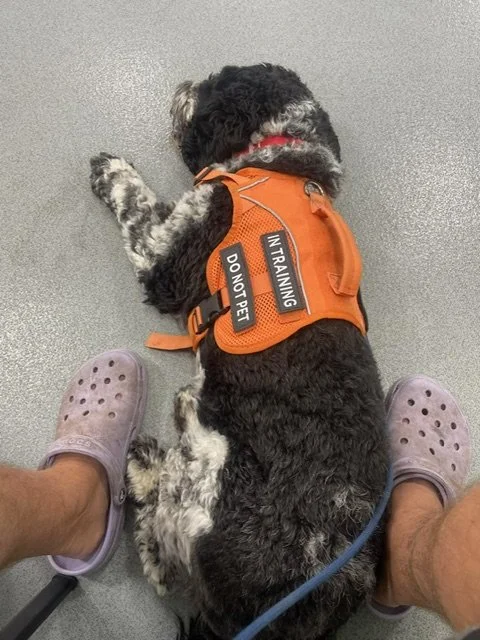
James became Bowie’s foster carer.
He also happens to be the dog trainer behind Project Better Dog.
Which, when you’re dealing with a complicated Cockapoo with some fairly strong opinions about life, is rather fucking handy.
James isn’t just training Bowie.
He learning Bowie.
His body language.
His triggers.
The tiny signals that say “I’m starting to struggle here” before Bowie feels the need to make himself considerably clearer.
He learning when to encourage him.
When to challenge him appropriately.
When to advocate for him.
When to change the environment.
And when the best thing everyone can do is leave the little sod alone.
That’s the stuff people don’t usually see.
We Said We’d Shout About the Trainers. So Here We Fucking Go.
In our first CWF blog, we said we’d shout about the trainers and behaviour professionals who step up for our complicated dogs.
We meant it.
So…
JAMES.
There.
Consider yourself officially shouted about.
Because rescue cannot do this stuff alone.
We can take dogs in.
We can arrange veterinary treatment.
We can find foster homes.
We can provide support.
But dogs with significant behavioural needs require people who actually know what they’re looking at.
Good trainers are worth their weight in fucking gold.
They don’t just look at a dog somebody has described as “unpredictable” and accept that as the diagnosis.
They ask questions.
What happened beforehand?
What was the dog’s body language telling us?
What was happening in the environment?
Was the dog frightened?
Frustrated?
Guarding something?
Overwhelmed?
In pain?
Did we miss the quieter warnings before the dog felt the need to shout?
Suddenly “he just snapped out of nowhere” can start looking rather less mysterious.
That doesn’t mean every behavioural problem can be fixed.
It doesn’t mean every dog can be safely rehabilitated.
And James doesn’t possess some mystical dog trainer superpower where he whispers into Bowie’s ear:
“Mate, stop being a dickhead.”
Although we’d quite like to see him try.
It means Bowie has somebody with the knowledge and experience to understand him and give him the best possible opportunity to succeed.
And a lot of that work is spectacularly boring.
Repetition.
Management.
Consistency.
Learning when something is becoming too much and changing the situation before the dog feels the need to escalate.
Something that used to cause a reaction suddenly doesn’t.
Handling gets easier.
Recovery gets quicker.
The dog chooses to disengage.
Something that took twenty minutes takes ten.
Eventually, a situation that once required enormous thought becomes fairly ordinary.
Nobody watching would necessarily notice those tiny changes.
But when you’re working with a complicated dog?
Boring can be fucking brilliant.
And all those boring days have been adding up.
And Then Bowie Went to a Dog Show…
A whole weekend.
Dogs.
People.
Noise.
Movement.
Strangers.
Lots going on.
Basically quite a lot for any dog to process, never mind one who came into rescue because anxiety and unpredictable behaviour were causing genuine concern.
And Bowie?
He was bloody fantastic.
He interacted with loads of people without an issue.
But that’s not even the best bit.
Bowie wasn’t simply tolerating people.
He was actively choosing to interact with them.
That’s fucking huge.
There’s a massive difference between a dog putting up with human interaction because they feel they don’t have another option and a dog voluntarily approaching people because they actually want to engage.
That’s what James was seeing.
Bowie was making choices.
Good ones.
No dramatic transformation.
No television dog trainer clicking their fingers.
No inspirational music playing in the background.
Just Bowie getting on with being a dog.
And considering where he started?
That’s exactly the sort of boring we bloody love.
And Then A Vet Looked In His Ears.
This might actually be our favourite bit.
Not because there’s anything particularly exciting about ears.
There really isn’t.
One of James’s friends is a mobile vet and was able to look at Bowie’s ears because they’d been bothering him. There’s a suspected issue there that now needs proper veterinary investigation.
Fairly mundane rescue stuff.
Except it isn’t.
Because go back to the beginning of Bowie’s story.
Remember what his owner was frightened of?
What happens if he gets ill?
What happens if he’s in pain?
What happens if nobody can safely get near him?
How will he ever be examined by a vet?
Those weren’t silly concerns.
They were completely legitimate concerns based on the dog she knew at that time.
And now here was Bowie.
After a busy weekend surrounded by dogs, people, noise and activity…
…having potentially uncomfortable ears examined.
And Bowie coped.
That’s the moment that tells us just how far he’s come.
For another dog, having their ears looked at might be completely unremarkable.
For Bowie?
It’s bloody massive.
And it doesn’t mean he should now be expected to tolerate humans doing whatever the hell they want to him.
That’s not what good behavioural work is about.
It’s about building trust.
Reducing anxiety.
Listening to communication.
Improving coping skills.
And making necessary things like handling and veterinary care safer and less stressful.
The dog show didn’t create Bowie’s progress.
It revealed it.
All the boring shit James and Bowie had been doing beforehand?
This is what it was for.
So here’s your shout out, Project Better Dog.
We’re incredibly proud of Bowie.
But we’re not going to post the lovely progress updates and forget about the human who’s been standing beside him doing the work.
James has fostered him.
Trained him.
Advocated for him.
Given him structure.
Given him opportunities.
Respected his communication.
And put in hours of work that most people will never see.
So, James and Project Better Dog:
Thank you.
For taking on one of our complicated ones.
For seeing Bowie rather than his behavioural history.
For putting in the boring hours.
For giving him time.
And for helping him show us what he’s actually capable of.
This is exactly why we said we’d shout about the trainers helping CWF dogs.
Because good rescue needs good professionals behind it.
And if publicly shouting about Project Better Dog embarrasses James slightly?
Well.
That’s just an added fucking bonus.
And No, This Doesn’t Mean His Previous Owner Failed.
We’re stopping that bullshit before it starts.
Because we know how these stories sometimes get interpreted.
“Well, he’s fine with James, so obviously…”
No.
Bowie doing brilliantly with James does not mean somebody else simply didn’t try hard enough.
James is a dog trainer.
He has professional knowledge and experience.
Bowie is now in an environment specifically suited to working with his behavioural needs.
Those are different circumstances.
His owner recognised that he needed something different.
She was honest about his behaviour.
She asked for help.
And because she did, Bowie got options.
One of those options was James.
So when we celebrate Bowie’s progress, his previous owner is part of that story too.
Her decision helped make this possible.
Nobody needs to be the bad guy.
Sometimes a situation simply isn’t working.
Recognising that before something goes seriously wrong isn’t giving up.
Sometimes it’s the most loving decision an owner can make.
Before Anyone Asks… No, You Can’t Adopt Bowie Yet.
We know what’s coming.
“Is Bowie available?”
“Can we adopt him?”
“He sounds perfect for us!”
Steady on.
No.
Bowie is not ready for adoption yet.
And one brilliant weekend at a dog show doesn’t change that.
It’s an enormous milestone.
We’re ridiculously proud of him.
But rehabilitation isn’t a straight line, and we’re not going to rush a dog into a home because he’s had some fantastic progress and suddenly looks “fixed”.
Bowie isn’t fixed.
We don’t particularly like that word anyway.
He’s not a broken toaster.
He’s still Bowie.
He has a behavioural history.
He has triggers.
He has things he finds difficult.
There are still things for us to learn.
There are still situations for James to work through with him.
And eventually, when the time is right, we’ll need to think very carefully about what kind of home Bowie actually needs.
Not what home looks nicest on paper.
Not who messages first.
What Bowie needs.
And we’re in absolutely no rush.
Bowie doesn’t know he’s supposed to be on a rescue timetable.
He doesn’t know people might be scrolling Facebook waiting for us to slap an AVAILABLE FOR ADOPTION banner across his stupidly fluffy face.
He just knows what’s happening today.
So that’s what we’re concentrating on.
Today.
Then tomorrow.
Then the next day.
And this is the bit rescue doesn’t usually show you.
Rescue stories are very often condensed into two photographs.
BEFORE: frightened, difficult, neglected, sick or unwanted dog.
AFTER: happy dog sitting on a sofa in their new home.
Everyone cries.
Everyone shares it.
Lovely.
Except there’s a bloody enormous bit missing.
The middle.
This bit.
The assessments.
The training.
The veterinary care.
The management.
The setbacks.
The tiny wins.
The boring days.
The “holy shit, did he really just cope with that?” moments.
The people quietly putting in hours of work when nobody is watching.
And the uncomfortable reality that sometimes we simply don’t know yet how the story ends.
That’s where Bowie is.
In the middle.
Right now, Bowie is in the middle.
He’s made incredible progress.
He’s got an incredible foster and trainer in James.
He’s showing us more and more of the dog underneath the anxiety and guarding.
But we’re not going to stick a neat little bow on his story because it makes for a nicer ending to a blog.
Because his story isn’t finished.
Not yet.
So what happens next?
We don’t bloody know.
And that’s rather the point.
We’ll keep working with Bowie.
James will keep doing what James does.
We’ll sort his ears.
We’ll keep watching.
Learning.
Training.
Managing.
Celebrating the boring stuff.
And probably swearing occasionally.
Maybe one day we’ll be writing the blog telling you that Bowie is finally ready to find his person.
Maybe he’ll throw us a few curveballs before we get there.
Knowing Bowie?
Probably.
But whatever happens, we’re going to show you the bit rescue doesn’t normally show.
The journey.
Not just the before and after.
Because Bowie isn’t a teddy bear.
He’s not a failed family pet.
He’s not an Instagram accessory with faulty software.
He’s a complicated, intelligent, curly little dog with his own boundaries, history and opinions.
Right now, he’s not a finished success story.
He’s not a failure either.
He’s a work in progress.
And luckily for Bowie, complicated dogs are rather our fucking thing.
Bowie: To be continued…
Bowie is currently undergoing behavioural rehabilitation with CWF and is not available for adoption. Please don’t send adoption enquiries for Bowie just yet. When he’s ready, we’ll tell you.
Loudly.
...