A Rescue Saying No Isn’t Insulting You!
Why the right home matters more than the first home
You’ve found a dog.
You’ve seen the photograph.
You’ve read the description.
You’ve already mentally moved their bed into the corner of your kitchen.
You’ve decided where you’re going for your first walk.
You’ve sent the photo to your family with:
“LOOK WHO I’M APPLYING FOR.”
Your mum knows.
Your best friend knows.
The woman you work with who once asked if you liked dogs probably knows.
You’ve possibly even started looking at collars.
Please don’t do that last one yet.
You fill in the application.
You send it off.
And then the rescue says:
No.
Well.
That’s a bit shit.
And we genuinely understand why it feels that way.
You’ve become emotionally invested in a dog you’ve never actually met. In your head, they’re already halfway through the front door.
Then some annoying people from a rescue come along and ruin everything.
Hi.
We’re the annoying people.
But here’s the thing we really need people to understand:
A rescue saying no to your application isn’t necessarily saying you’re a bad dog owner.
It isn’t saying you’re a bad person.
It isn’t saying you don’t love dogs.
Sometimes it simply means:
You’re not the right home for this particular dog.
Those are two very different things.
And when we’re responsible for deciding where a dog potentially spends the rest of their life, we’re going to choose what we believe is right for the dog over avoiding an awkward conversation.
Every.
Single.
Time.
We’re Matching Dogs, Not Selling Sofas
Adoption isn’t first come, first served.
At least, it shouldn’t be.
You don’t click:
ADD TO BASKET.
You don’t get priority because you commented “MINE” seventeen seconds after the adoption post went live.
And we’re not awarding a Cockapoo to whoever produces the most impressive CV.
We’re trying to find a home where that particular dog has the best realistic chance of being safe, happy and, rather importantly…
Staying there.
Because getting a dog adopted isn’t particularly impressive if they’re back in rescue six weeks later because everybody ignored the glaringly obvious reasons the match wasn’t suitable.
And this is where some of the things rescues hear come in.
“But I’ve had dogs all my life.”
Brilliant.
We genuinely value experience.
But having owned dogs for thirty years doesn’t automatically make somebody the right home for every dog.
What dogs?
What needs?
What behaviours?
What environment?
Thirty years of happily owning relatively straightforward family Labradors doesn’t automatically prepare someone for significant resource guarding, separation distress or a dog with a bite history.
Likewise, somebody who hasn’t owned twelve dogs isn’t automatically a bad applicant.
They might have exactly the lifestyle, attitude and willingness to learn that a particular dog needs.
Experience matters.
But relevant experience matters more.
And sometimes one of the best qualities an adopter can have isn’t knowing everything.
It’s knowing that they don’t.
Then there’s:
“But I’ve got a huge garden.”
Lovely.
We love a garden.
We’re very pleased for you and your enormous garden.
But we’re not rehoming a lawnmower.
A big garden can be fantastic.
It also doesn’t tell us whether you understand the dog, whether your household suits their behaviour or whether your lifestyle works for them.
You can have three acres, six-foot fencing and a water feature worthy of Buckingham Palace.
If the dog can’t safely live with your resident dog?
Still no.
If the dog needs a quieter environment than your household can offer?
Still no.
If the dog can’t live with children and you have three?
Definitely still no.
We match dogs to lives, not property listings.
And then we get:
“But my children are really good with dogs.”
They very well might be.
Some children understand dogs’ boundaries better than plenty of adults we’ve encountered.
But if our assessment tells us a dog needs an adult-only home, we’re going to look for an adult-only home.
That’s not an insult to your children.
It’s not a challenge for you to prove how sensible they are.
It’s risk management.
Sometimes we know something about the dog’s history.
Sometimes we’ve seen behaviour that concerns us.
And sometimes we simply don’t know enough about the dog’s history to responsibly say yes.
That’s important too.
Responsible rescue isn’t always:
“We know this definitely won’t work.”
Sometimes it’s:
“We don’t know enough to tell you this is safe.”
And that’s still a reason to say no.
But He Looks Perfect for Us
He might.
In the photograph.
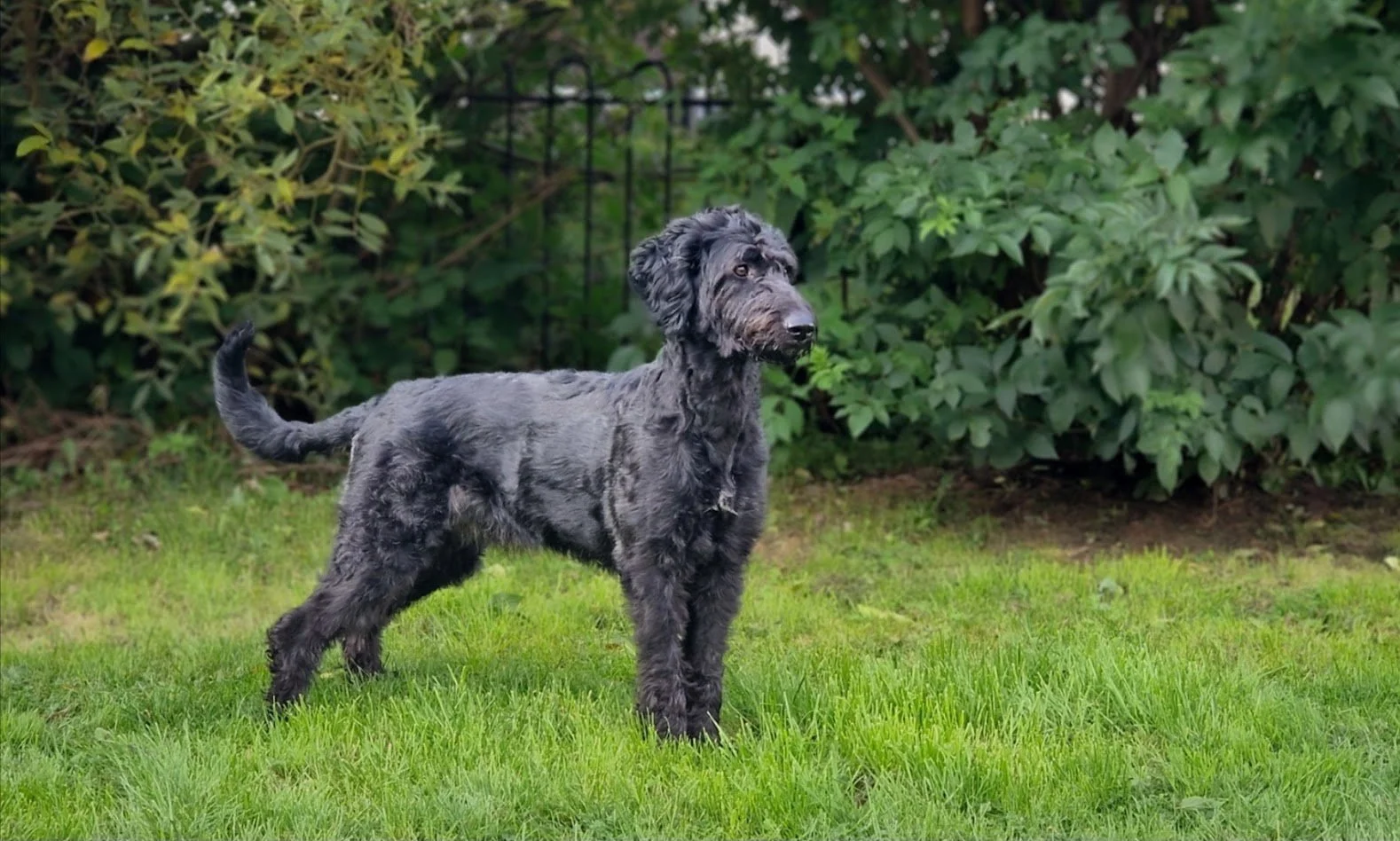
Photographs are wonderfully useless at showing behavioural complexity.
A dog can look like an absolute angel while simultaneously having a list of requirements longer than your weekly Tesco shop.
The photograph doesn’t tell you how they cope with visitors.
Whether they guard food or objects.
Whether they can live with another dog.
Whether they can live with cats.
How they cope when left.
Whether they’re frightened of handling.
Whether busy environments overwhelm them.
Whether they’ve ever bitten.
Whether they need medication.
Whether they need ongoing professional behavioural support.
Or whether we’ve discovered that something seemingly insignificant is actually extremely significant to that particular dog.
You see the photograph.
Hopefully, we’ve spent time getting to know the dog.
That’s the difference.
And that’s why we ask so many bloody questions.
Believe us, it’s not because rescue volunteers have a passionate love of paperwork.
Nobody is sitting at home at 10pm thinking:
Do you know what would really improve my evening? Another six-page adoption form.
The questions have a purpose.
Who lives in the home?
Are there children?
Other dogs?
Cats?
How long will the dog be left?
What’s your normal routine?
What experience do you have?
What are you comfortable managing?
What are you looking for from a dog?
And occasionally:
What do you think you’re comfortable managing but might not fully understand yet?
We’re not trying to catch you out.
We’re trying to build a picture.
Because we’re not looking for somewhere a dog can technically live.
We’re trying to find somewhere they can thrive.
Please Don’t Tell Us What You Think We Want to Hear
This one deserves its own conversation.
Please don’t lie on an adoption application.
Seriously.
If you have another dog, tell us.
If children regularly visit, tell us.
If the dog is going to be left for certain hours, tell us.
If your garden isn’t secure yet, tell us.
If there’s something about your circumstances you’re worried might affect the application…
Tell us.
Sometimes the thing you’re worried about won’t actually be a problem.
Sometimes it will mean that particular dog isn’t suitable.
But hiding it doesn’t make the issue disappear.
It just means we’re making a welfare decision without all the information.
We cannot match a dog to a fictional household.
And while we’re here, a home check isn’t Four in a Bed.
Nobody is arriving with white gloves to inspect the top of your kitchen cupboards.
We’re not scoring your decorative cushions.
We’re not checking whether your towels match.
Nobody from CWF is going to deduct points because there’s washing on the chair.
Frankly, if rescue people started judging other people’s laundry situations, most of us would need to keep very quiet.
The question isn’t:
Is this home perfect?
It’s:
Is this home appropriate for this dog?
Very different thing.
Sometimes “No” Really Means “Not This Dog”
This is probably the most important part.
Being unsuitable for one dog doesn’t necessarily mean you’re unsuitable to adopt.
You might be an absolutely fantastic home.
For a different dog.
The dog you’ve fallen in love with might need to be the only pet.
You already have two dogs.
Nobody has failed.
The dog might need an adult-only home.
You’ve got young children.
Nobody has failed.
They might need someone around for most of the day.
Your routine doesn’t allow that.
They might need someone experienced with a particular behavioural issue.
That’s simply not what you can offer.
None of those things make you a bad person.
They make you:
Not the right match.
And somewhere there may be another rescue dog whose requirements line up beautifully with exactly the life you have.
Please don’t become so focused on one photograph that you miss them.
And yes, sometimes there will be several excellent applications for the same dog.
We still only have one dog.
That means good people get disappointed.
We hate that bit too.
But adoption isn’t a competition.
You don’t need to win the dog.
The question isn’t:
Who deserves this dog most?
It’s:
Which available home best meets this dog’s needs?
Dogs aren’t prizes.
And they aren’t consolation prizes either.
Because Getting It Wrong Has Consequences
This is where the funny bit stops being quite so funny.
When an adoption fails, you don’t simply press:
UNDO.
A dog may have spent weeks or months learning to feel safe in foster.
Then they move.
New people.
New smells.
New routine.
New environment.
New expectations.
Then something goes wrong.
And they move again.
Back to foster.
To another foster home.
Into kennels.
Whatever option the rescue can find.
For some dogs, particularly anxious or behaviourally complex dogs, that disruption can be enormous.
And humans get hurt too.
Adopters become attached.
Families are upset.
Foster carers pick up the pieces.
The rescue has to find another safe placement.
And the dog has another major transition to cope with.
Can every failed adoption be prevented?
Of course not.
Dogs are living animals, not computer programmes.
Life changes.
People’s circumstances change.
Dogs can behave differently in different environments.
Sometimes everybody makes the best decision they can with the information available and it still doesn’t work.
That’s reality.
We’re not going to pretend rescues always get it right either.
We don’t.
We’re human.
Sometimes we make mistakes.
Sometimes we assess something incorrectly.
Sometimes a dog shows us something in a home that they never showed in foster.
Responsible rescue isn’t about pretending mistakes never happen.
It’s about doing everything reasonably possible to reduce them.
Assessing.
Listening.
Being honest.
Matching carefully.
Supporting adopters.
And admitting when something isn’t working.
Because protecting our pride is considerably less important than protecting the dog.
You Are Allowed to Say No Too
This works both ways.
If we tell you honestly about a dog’s needs and you think:
“Actually… I don’t think I can manage that.”
Good.
Thank you.
Seriously.
We would much rather hear that before the adoption.
You don’t need to prove anything.
You don’t need to take on a behavioural dog because saying no makes you feel guilty.
You don’t need to accept medical needs you aren’t confident managing.
You don’t need to convince yourself that love will magically make everything easy.
Sometimes love means recognising:
I’m not the right person for this dog.
That’s responsible too.
A good adoption needs the rescue to be honest about the dog and the adopter to be honest about themselves.
Sometimes the smartest answer on either side is:
No.
The Dog Doesn’t Owe Anyone an Adoption
This is something we feel quite strongly about.
A dog doesn’t owe somebody an adoption because they filled in a form.
They don’t owe the rescue a quick success story.
They don’t owe Facebook a happy ending by Friday.
Some dogs need longer.
Some need rehabilitation.
Some need medical treatment.
Some need more assessment.
Some need very specific homes.
And some will have far fewer suitable homes available because of their needs.
That’s okay.
We would rather wait.
Because our goal isn’t simply:
ADOPTED.
It’s:
Safe. Suitable. Sustainable.
That’s a considerably less exciting Facebook graphic.
But it’s rather more important.
So Please Don’t Take the “No” as an Insult
You can absolutely be disappointed.
You can be sad.
You can think:
Well, that’s a bit shit.
We’re not expecting you to throw a party because your application wasn’t successful.
What we’re asking is that you don’t automatically turn disappointment into:
“That rescue doesn’t care about dogs.”
Because quite often, the reason we’ve disappointed you is precisely because we do care about the dog.
They can’t fill in the application form themselves.
They can’t sit down with you and explain:
“I’d really prefer a quiet home.”
“Small children make me nervous.”
“I actually hate living with other dogs.”
“Please don’t leave me alone all day.”
“I need somebody who understands my behaviour rather than punishing me for it.”
So we have to advocate for them.
Sometimes that means being the annoying rescue asking questions.
Sometimes it means making people wait.
And sometimes it means saying no.
We’re not trying to keep dogs from good people.
We’re trying to stop dogs ending up in the wrong homes.
That’s the difference.
Every dog that comes into our care is an individual.
Their history matters.
Their behaviour matters.
Their medical needs matter.
Their preferences matter.
Their limitations matter.
Their future matters.
So we don’t want the fastest adoption.
We don’t want the first application.
We don’t want the person with the biggest garden.
We don’t want the person who’s owned the most dogs.
And we definitely don’t want whoever shouts the loudest in the Facebook comments.
We want the right home.
Because getting a dog adopted makes a lovely social media post.
Getting them adopted properly, into a home that understands them, wants the dog they actually are and can meet their needs for the rest of their life?
That’s the actual bloody job.
And occasionally doing that job means saying:
No.
Not because we think you’re awful.
Not because we’re on a power trip.
Not because we secretly want to keep all the dogs ourselves.
Although foster carers do occasionally make that last one look suspicious.
Sometimes no simply means:
Not this dog.
And if the dog whose needs fit your life comes along?
There’s a word we’d much rather be able to say.
Yes.